
The Wine Region
Balatonfüred–Csopak
Wine Region
History & Heritage
The Balatonfüred–Csopak wine region on the northern shore of Lake Balaton is one of Hungary's oldest wine-producing areas. Viticulture traditions date back to antiquity, and over the centuries the region has become synonymous with quality and distinction.
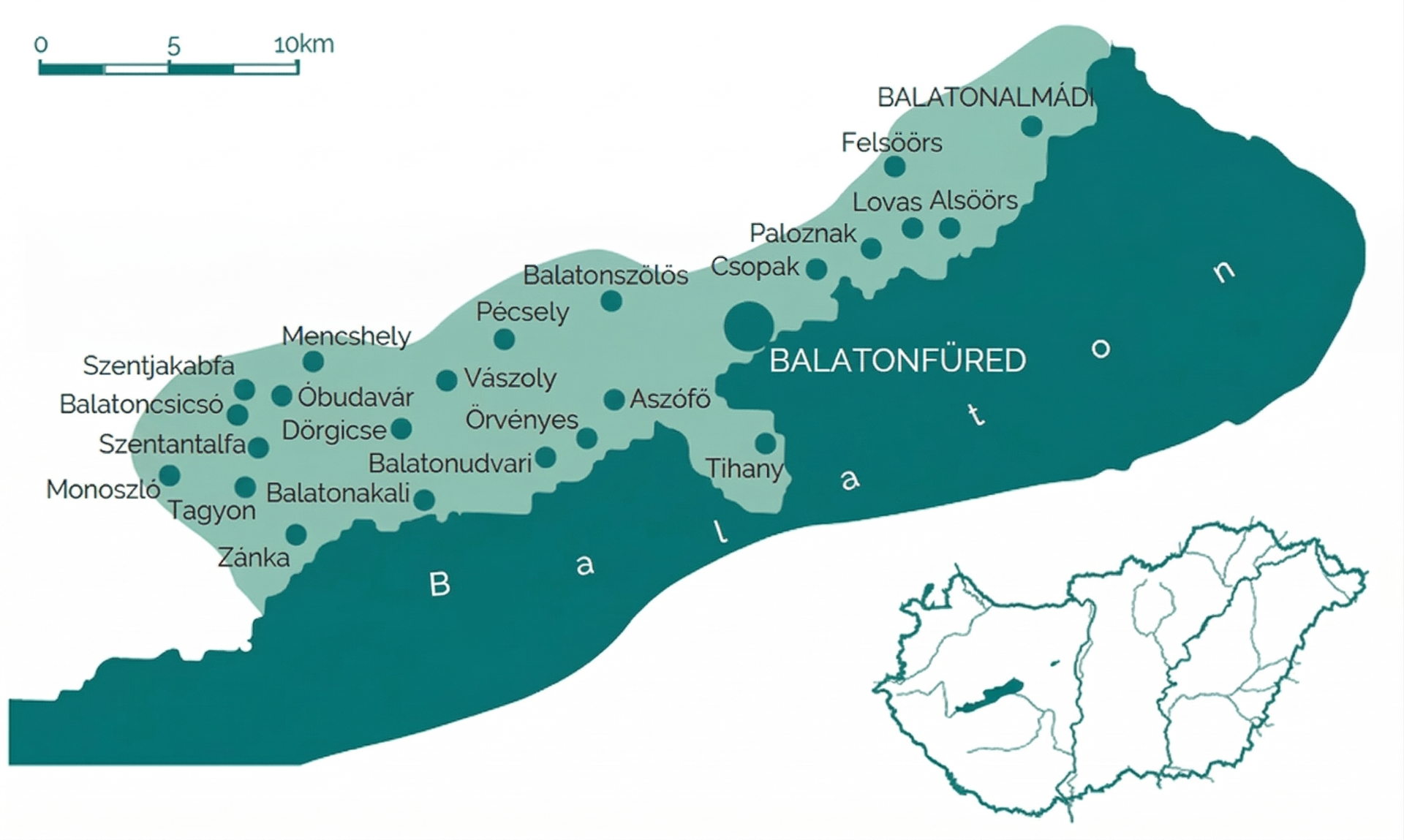
Map of the Balatonfüred–Csopak Wine Region
Terroir & Climate
The region's unique terroir is shaped by the moderating effect of Lake Balaton, the diversity of basaltic and loess soils, and the exceptional sun exposure of its south-facing slopes. These conditions create ideal conditions for elegant, mineral-driven white wines.
Main Grape Varieties
The wine region is primarily white wine territory. The defining variety is Olaszrizling (Welschriesling), which has its own protected designation of origin in Csopak. Also important are Chardonnay, Pinot Gris, Sauvignon Blanc, Riesling and Müller-Thurgau. Red wines are produced in smaller quantities, mainly from Blaufränkisch, Merlot and Cabernet varieties, primarily on the Tihany Peninsula.
Wine Style
Wine styles vary depending on the sub-appellation. Balatonfüred wines tend to be fuller-bodied and more characterful, while Csopak wines are more elegant, with fine acidity and a more restrained style. Common to both is a mineral backbone, harmony, and that characteristic almond and saline finish so typical of Olaszrizling.
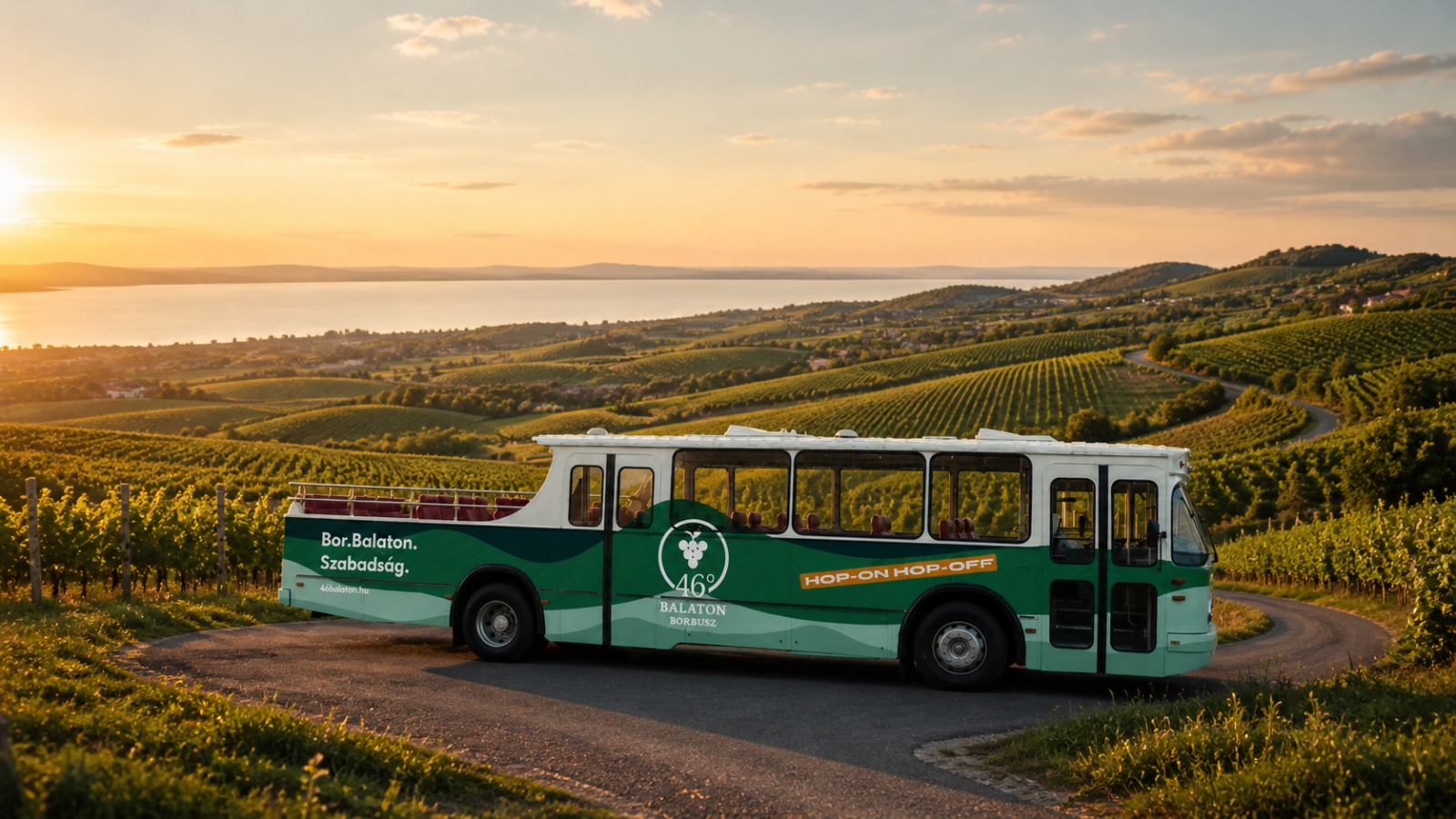
Discover the Wine Region
The 46° Balaton Wine Bus showcases the character of the wine region on carefully planned routes.
One connects the region's most renowned wineries through Balatonfüred, Pécsely, Balatonszőlős, Csopak and Paloznak – a classic, iconic experience packed into a single day. Another is a nearly 70 km discovery journey through rolling hills, away from the crowds, with exceptional wines and breathtaking panoramas.
On any given day, only one of the routes is available; however, the different programs offer numerous distinct, non-overlapping stops. It’s worth exploring several on separate days – each time, you’ll discover new experiences and a different side of the wine region.